If you need a logo, business card, flyer, and the right files to use them properly, the question usually is not just what you are getting. It is how long it will take. A realistic brand identity package timeline helps you plan launch dates, print runs, social announcements, and website updates without guesswork.
For small businesses, local operators, and service brands, timing matters because branding is rarely happening in isolation. You may be opening a new location, promoting a seasonal offer, or replacing outdated materials that no longer match how your business looks today. When the process is structured well, branding moves faster, feedback is easier, and the final assets are more consistent across every touchpoint.
What a brand identity package timeline usually includes
A brand identity package timeline is the schedule for turning your brand brief into finished design assets and production-ready files. That usually covers discovery, concept development, revisions, approval, and final delivery. If the package includes more than a logo, the timeline should also account for connected items such as business cards, flyers, social graphics, or basic brand rules.
The key point is that good branding is not delayed by design work alone. Most timeline blowouts happen because of unclear briefs, late feedback, missing content, or too many decision-makers involved at once. A strong process keeps those issues under control before they turn a one-week revision into a three-week stall.
For a focused starter package, many businesses can expect the full process to take between 1 and 3 weeks. More complex identity systems can take longer, especially if naming, messaging, photography, website work, or multiple collateral items are included.
A practical brand identity package timeline, week by week
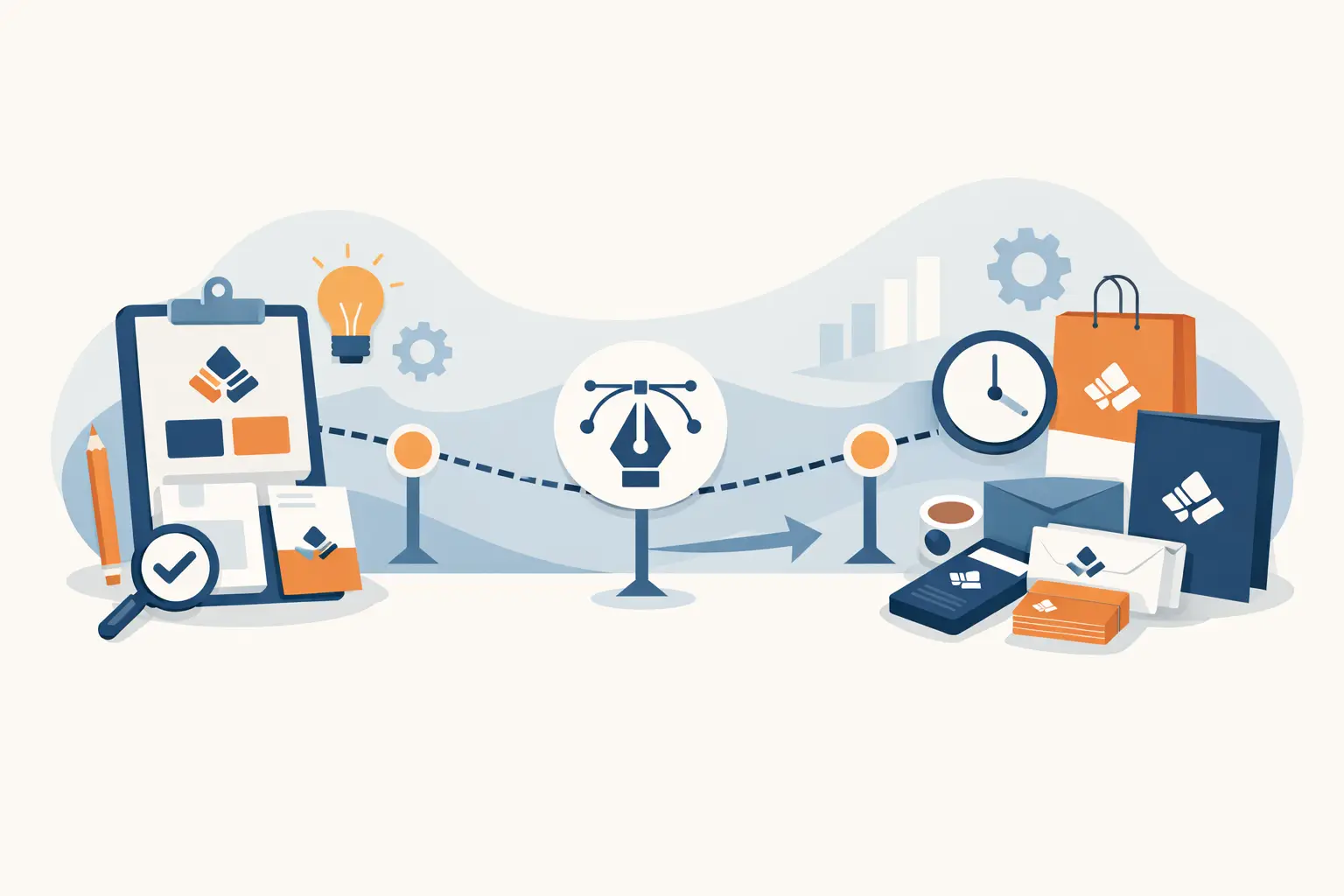
The exact schedule depends on scope, but most projects move through a few predictable stages.
Stage 1: Briefing and kickoff
This is where speed is either protected or lost. A clear kickoff gives the designer enough direction to start without constant back-and-forth later. At this stage, you would typically confirm your business goals, target audience, preferred style, competitors, required deliverables, and launch deadline.
If your package includes logo design, business cards, and a flyer, the brief should also cover practical details such as contact information, services, print preferences, and any existing brand elements you want to keep. Many delays start here because clients assume those details can be sorted later. They can, but later usually costs time.
For a well-prepared client, this stage can be completed in 1 to 2 business days.
Stage 2: Creative direction and logo concepts
Once the brief is approved, concept development begins. This is usually the most strategic part of the process because the logo sets the tone for everything else. Color direction, typography, layout style, and brand personality start taking shape here.
Depending on the studio and package size, this stage often takes 2 to 5 business days. Faster turnaround is possible when the brief is specific and the decision-making process is tight. If multiple partners or managers need to approve every option, expect that timeframe to stretch.
This is also where process matters more than volume. More concepts do not always mean better results. A focused set of well-developed directions usually leads to quicker, stronger decisions than a large batch of scattered ideas.
Stage 3: Revisions and refinement
After the initial presentation, revisions begin. This part of the brand identity package timeline should be defined upfront. If revision rounds are open-ended, the project can drift. If they are time-boxed and structured, progress stays visible.
Most efficient design packages include one or two revision rounds for the core identity. That is enough to refine a strong concept without reopening the brief every few days. Good revisions are specific. Instead of saying, “Can we try something different?” it is more helpful to say, “The icon feels too corporate for our audience” or “We need the text to stay readable on small print pieces.”
This stage often takes 2 to 4 business days, depending on response times and the amount of change requested. Small refinements move quickly. Full direction changes do not.
Stage 4: Rollout into supporting materials
Once the logo direction is approved, the rest of the package usually moves faster. Business cards and flyers are easier to build when the brand system is already defined. Fonts, colors, spacing, and hierarchy have a clear starting point, which reduces design guesswork.
This stage can take another 2 to 5 business days depending on how much content is ready. A business card is usually straightforward. A flyer often takes longer because it relies on finalized copy, service details, pricing, offers, and images. If those are not ready, design pauses.
This is why practical studios build around deliverables, not just ideas. A brand package works best when each item is treated as part of the same system, but with its own production needs.
Stage 5: Final approval and file delivery
Once everything is signed off, final files are prepared. This step is often underestimated, but it matters. The difference between “finished design” and “usable brand asset” is file preparation.
A professional handoff should include the right formats for both print and digital use. That may include logo files in PNG, JPG, PDF, and vector formats, plus print-ready card and flyer files with correct sizing and bleed. In some cases, a simple brand guide is also included so future materials stay consistent.
Final packaging usually takes 1 to 2 business days after approval.
What changes the timeline
Not every project should move at the same speed. A startup with one decision-maker and a clear offer can often move fast. A hospitality group refreshing multiple venues may need more rounds, more internal sign-off, and more adaptation across materials.
The biggest timeline variables are scope, responsiveness, and clarity. If you are only creating a logo kit with a small set of collateral, the process can be compact. If your package includes photography, website design, multiple flyers, signage, or a broader brand rollout, the timeline naturally expands.
Urgent turnaround is possible, but there is a trade-off. Faster schedules require faster client approvals, tighter revision limits, and fewer strategic changes midway through. If you want speed and flexibility at the same time, something usually has to give.
How to keep your project moving
The fastest brand projects are not rushed. They are organized. If you want a shorter brand identity package timeline, preparation matters more than pressure.
Start by gathering your business details before kickoff. That includes your exact business name, contact information, service list, preferred wording, print requirements, and any examples of styles you like or dislike. If a flyer is included, prepare the offer and call to action early rather than leaving them for later.
It also helps to nominate one main point of contact. Too many voices can slow a project, especially when feedback conflicts. Internal discussion is fine, but final feedback should come back in one clear, consolidated response.
This is where a methodical process earns its place. A structured framework such as a 3P Method keeps things personal enough to reflect your business, practical enough to meet deadlines, and professional enough to produce files you can actually use.
What a realistic timeline looks like for a small business package
For a standard logo, business card, and flyer package, a realistic schedule often looks like this: 1 to 2 days for briefing, 2 to 5 days for logo concepts, 2 to 4 days for revisions, 2 to 5 days for collateral design, and 1 to 2 days for final file setup. In practice, that puts many projects in the 7 to 15 business day range.
That is a useful planning window for launches, rebrands, and campaign prep. It gives enough room for strong design decisions without dragging the process into agency-style overcomplication.
Some studios, including Brandcrafter, build their packages around this kind of staged delivery because it gives clients more control. You can start with core assets, get them live quickly, then expand into additional materials as your business grows.
The timeline should reduce risk, not add it
A good timeline does more than tell you when files will arrive. It shows how decisions will be made, when feedback is needed, what is included, and where approvals happen. That clarity lowers risk on both sides.
If a design provider cannot explain their process in simple terms, delays are harder to predict and even harder to fix. On the other hand, when milestones, revision rounds, deliverables, and payment stages are clear from the start, the project feels manageable. That matters when you are balancing branding with the rest of your business.
The best time to ask about timing is before the project starts, not when you are already waiting for files. A clear process gives you room to market confidently, print on time, and launch with assets that look consistent from day one.
If you are planning a new brand or refreshing an old one, look for a design partner who can show you exactly how the work will move from brief to final files. The right timeline is not just about speed. It is about getting useful, credible brand assets in your hands when you actually need them.