
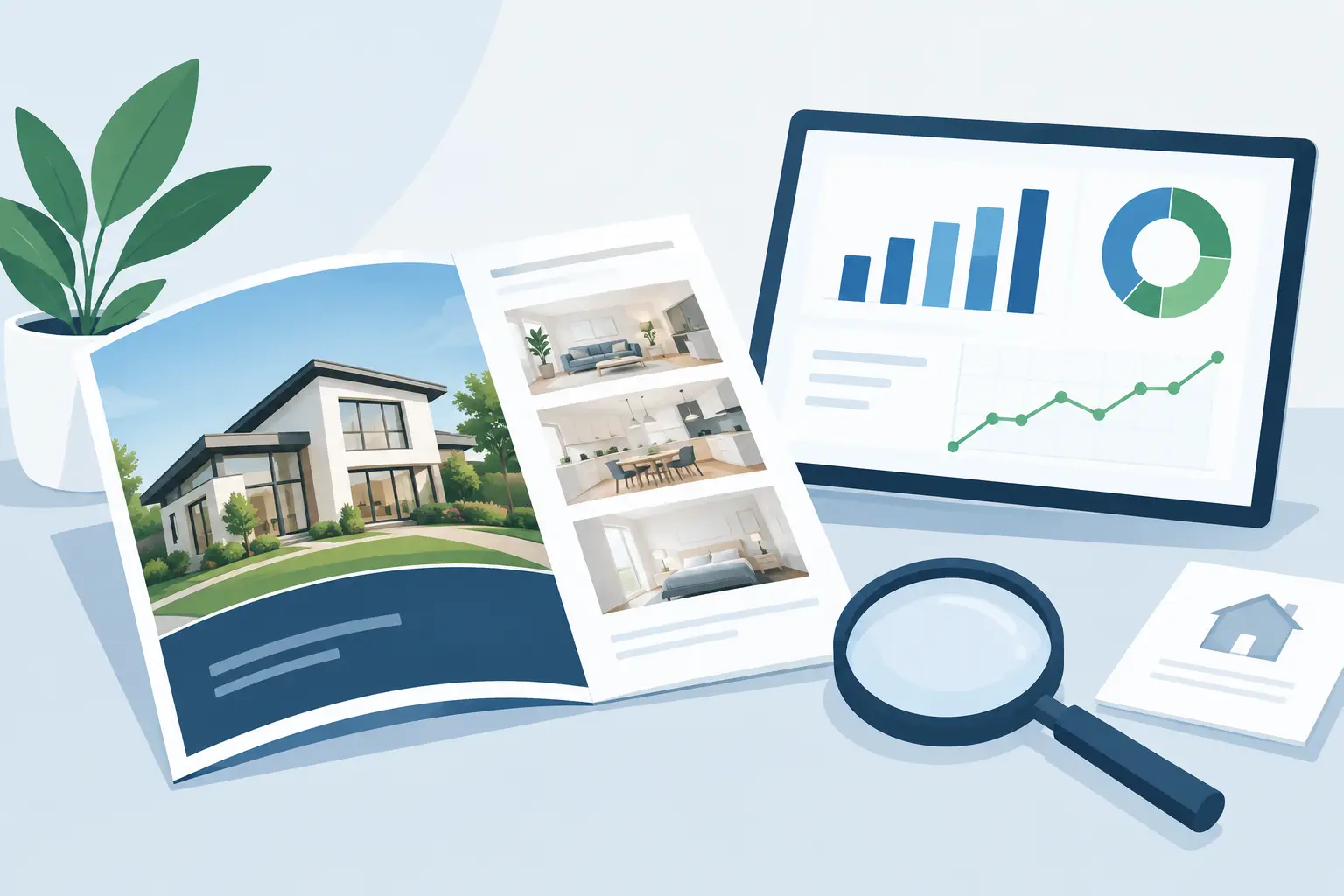
A brochure left on a counter, handed out at an open house, or downloaded from a listing page has one job: move a prospective buyer, tenant, guest, or investor to take the next step. Strong property brochure results are not measured by how polished the piece looks alone. They are measured by whether it produces inquiries, inspections, bookings, applications, or conversations with qualified people.
For property operators, agents, developers, and hospitality businesses, print still earns its place when it supports a clear sales process. The difference is planning the brochure as a working marketing tool, not a decorative afterthought.
Start with one defined action
The most common reason brochures underperform is simple: they try to do everything. A single piece may attempt to sell the location, explain every feature, introduce the business, show pricing, share testimonials, and push social media follows. The result is often attractive but unfocused.
Before design begins, choose the primary action you want a reader to take. For a residential listing, that could be booking a viewing. For an apartment development, it may be requesting the floor plan and price list. For a hotel, holiday park, or venue, it could be scanning a code to check availability or submit an event inquiry.
One primary action does not mean hiding everything else. It means the hierarchy is clear. A reader should understand within seconds what is being offered, why it is worth considering, and what to do next.
A practical brief should define:
- The audience most likely to respond
- The offer or property being promoted
- The single priority action
- The distribution point, such as inspections, direct mail, reception, or local businesses
- The measurement method before the brochure goes to print
This is the first checkpoint in a practical design process. If the action is vague at the briefing stage, the final brochure will have no reliable way to prove its value.
What good property brochure results actually look like
Results depend on the property type, price point, local market, and campaign length. A luxury development with a six-month sales cycle should not be judged by the same numbers as a weekend open-home flyer. The useful question is not, “How many brochures did we print?” It is, “Did this brochure create the right kind of response?”
Track response, not just distribution
Print quantity tells you how much collateral was produced. It does not tell you whether it worked. A run of 2,000 brochures is not a success if the right audience never sees it or has no reason to respond.
Track direct responses with a unique QR code, short campaign URL, dedicated phone number, or simple inquiry form. Each option can work, but it needs to be easy. A long web address or a QR code that sends people to a generic homepage creates friction and weakens attribution.
For a property campaign, measure the number of scans or visits, then compare that number with inquiries, inspection bookings, applications, and completed transactions. This gives you a clearer view of the path from brochure to outcome.
Look at lead quality
A brochure can generate plenty of attention without generating viable leads. This happens when the design is visually appealing but omits the details that help people qualify themselves.
Price guidance, location, property type, capacity, key amenities, availability, and the next-step process can reduce low-fit inquiries. Not every property needs every detail upfront. In some sales environments, withholding a price can encourage a conversation. In others, it wastes staff time and frustrates serious prospects. The right choice depends on your market and sales strategy.
Ask your team to record a few simple points for brochure-sourced leads: what they asked about, how quickly they responded, whether they booked a viewing, and whether they were a realistic fit. A smaller number of qualified leads can outperform a large volume of casual interest.
Measure conversion by stage
Property decisions rarely happen in one interaction. A brochure may prompt an initial scan, while a follow-up call, viewing, or email closes the sale later. That makes stage-by-stage measurement more useful than relying on a single final number.
A straightforward funnel might be brochure scans, inquiry form submissions, inspection bookings, attended inspections, offers or applications, then completed sales, leases, or bookings. Review the drop-off points. If many people scan but few inquire, the landing page or call to action may need work. If inquiry is strong but inspections are weak, the information provided may not match the audience’s expectations.
Build the brochure around fast decisions
Most readers will not study a brochure from top to bottom. They will scan it while standing at an open house, sitting in a reception area, or comparing multiple options later. The layout must make the most important information easy to find without making the page feel crowded.
Start with a clear headline that identifies the property or opportunity. “Modern Office Suites Near Downtown Transit” is more useful than a vague line about possibility. Follow it with a short value statement that answers why the reader should care: walkability, investment potential, flexible lease terms, family-friendly space, panoramic views, or venue capacity.
Photography does much of the persuasive work, but it must be purposeful. Use images that show the experience a person is buying, not only empty rooms. For a property listing, that may mean the strongest exterior approach, a light-filled living area, the view, and a key lifestyle feature. For hospitality, show the guest experience, rooms, shared spaces, and the details that support the rate or package.
Floor plans, maps, amenity icons, and property facts are valuable when they reduce questions. They should support the decision rather than compete with the main message. Small type, generic icons, and dense specification blocks can make a brochure look comprehensive while making it harder to use.
Make the call to action visible and specific
“Contact us” is not always enough. It asks the reader to decide what happens next. A stronger call to action gives a clear reason and a clear route forward: “Scan to book a private viewing,” “Request current availability,” or “Get the full investment information pack.”
Place the call to action where people naturally pause: near the main property summary, at the end of the brochure, and beside the contact details. Repetition is useful when it is consistent. The same message, phone number, and QR destination should appear across the brochure, email follow-up, listing page, and social promotion.
The destination matters as much as the printed piece. If someone scans a code and lands on a slow, generic, or poorly organized page, the brochure has done its job only to lose the lead at the finish line. Keep the next step short, mobile-friendly, and aligned with the promise made in print.
Use print specifications that protect the brand
Property brochures are handled, folded, carried, and compared. Paper weight, finish, folds, image quality, and trimming accuracy affect perceived value. A premium stock may suit a high-end development or wedding venue, while a practical, cost-efficient flyer may be the right choice for frequent rental promotions. More expensive is not automatically more effective.
The goal is consistency. Your logo, colors, typography, photography style, and contact details should match every other customer touchpoint. When a prospect sees the brochure after viewing a website or social post, it should feel like the same business.
Use production-ready files with correct bleed, color settings, and image resolution. A polished layout can still fail at the printer if the artwork is not prepared properly. Clear specifications also make future updates faster, particularly when pricing, availability, or campaign messaging changes.
Review results and improve the next version
Do not wait until a campaign ends to ask whether the brochure is working. Check results early enough to adjust distribution, messaging, or follow-up. If one QR code is underused, test a more direct call to action or relocate it. If people consistently ask questions the brochure should answer, update the next print run.
Keep a simple record of version, print quantity, distribution locations, campaign dates, and response data. This creates a useful baseline for future properties and promotions. Over time, you will see whether certain neighborhoods, events, formats, offers, or images produce better-quality leads.
A dependable creative partner can help turn those findings into better collateral without restarting from scratch. At Brandcrafter, that means a structured, collaborative process that keeps the design aligned with the real business goal: helping customers move from interest to action.
The best brochure is not the one that receives the most compliments at the printer. It is the one a prospective customer keeps, understands quickly, and uses to take the next step with confidence.