A business owner usually hits this decision at the same moment pressure ramps up. You need a logo, yes, but you also need business cards, a flyer for promotion, social graphics, maybe a website header, and everything has to look credible fast. That is where the question of logo kit versus custom identity becomes less about design theory and more about business fit.
For some businesses, a logo kit is the smartest first move. For others, a custom identity saves time and money later because it builds the full system up front. The right choice depends on where your business is now, how quickly you need to launch, how many touchpoints you need to manage, and whether your brand has to work hard across multiple channels from day one.
What a logo kit actually gives you
A logo kit is not just a single logo file emailed over with no structure. A good logo kit is a practical brand starter package. It gives you the core visual assets you need to show up professionally and start using your brand right away.
In most cases, that means your main logo, a few layout variations, color versions, and the file types needed for print and digital use. When the package is built properly, it can also extend into everyday essentials like a business card and flyer, which matters because most small businesses do not need abstract brand strategy first. They need usable materials that help them win work.
That is why logo kits appeal to startups, trades, hospitality operators, real estate professionals, and local service businesses. They are fast, structured, and budget-smart. You get clarity on deliverables, timelines, and revisions, which lowers risk and keeps the process moving.
What a custom identity includes
A custom identity goes further. Instead of focusing mainly on the logo and immediate rollout pieces, it builds a broader visual system designed for consistency over time.
That can include typography direction, a more developed color palette, supporting graphic elements, image style, brand rules, and usage guidance across print, social, signage, packaging, presentations, and web. The value is not only in having more assets. The value is in having a system that helps every future design decision feel connected.
For businesses with multiple offers, multiple locations, premium positioning, or a need for strong differentiation, that added depth can make a clear difference. A custom identity reduces guesswork later because the brand has already been thought through beyond the logo itself.
Logo kit versus custom identity: the real difference
The biggest difference is not quality. It is scope.
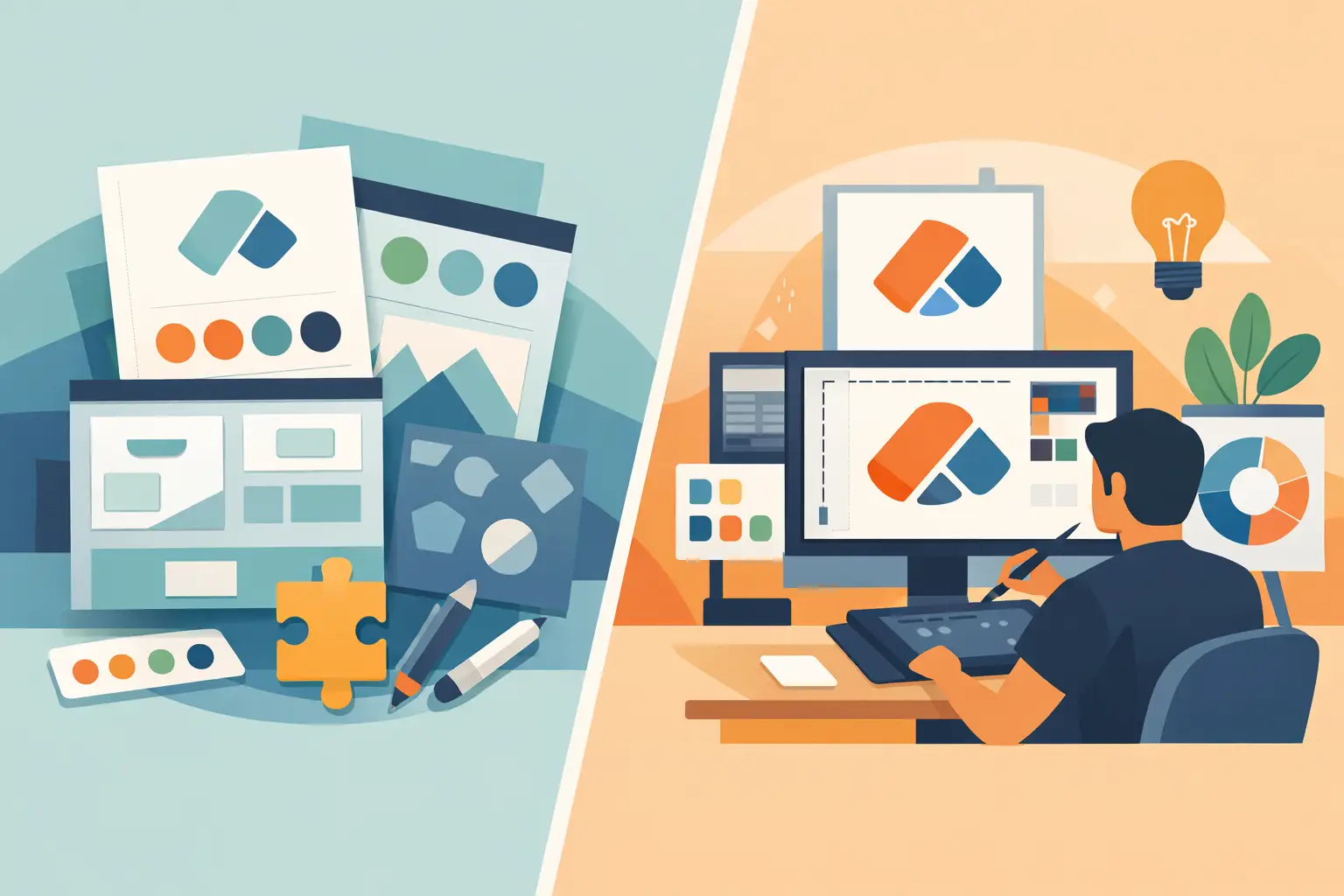
A logo kit is built to get you launched quickly with practical, professional assets. A custom identity is built to create a more complete brand framework for growth, consistency, and scale. One is not automatically better than the other. They solve different problems.
If you only compare price, you can miss the real decision. The better question is this: do you need a strong starting point, or do you need a broader system?
A logo kit usually works best when your immediate priority is speed, credibility, and controlled spending. A custom identity usually makes more sense when your business already has complexity, stronger market competition, or enough visibility that inconsistency will cost you.
When a logo kit is the smarter choice
If you are launching a business, testing a concept, or updating outdated visuals without rebuilding everything, a logo kit often gives you the best return. It covers the essentials without slowing you down.
This is especially true when your daily sales activity relies on simple, repeatable brand touchpoints. If your customers mainly see your logo on a card, flyer, social post, uniform, or vehicle sign, you may not need a full identity architecture on day one. You need a clean logo, a professional look, and files that work where you actually use them.
A logo kit is also a strong choice when decision-making speed matters. Many business owners do not want a long discovery process with endless rounds of conceptual exploration. They want a defined workflow, clear checkpoints, and enough flexibility to collaborate without getting stuck. A process-led approach keeps the project moving and prevents branding from becoming an expensive delay.
That is one reason Brandcrafter structures projects around a practical rollout instead of vague creative sprawl. For many businesses, a focused kit with clear deliverables is exactly what moves the brand from idea to market.
When a custom identity is worth the investment
A custom identity becomes more valuable when your brand has to carry more weight.
If you are repositioning a mature business, entering a crowded market, launching a premium service, or managing multiple customer touchpoints, the extra depth pays off. Without that structure, teams often start improvising. Fonts change. Colors shift. Social graphics look unrelated to printed materials. Sales documents feel disconnected from the website. The business still functions, but the brand looks less trustworthy than it should.
A custom identity helps prevent that drift. It creates standards early, which means future marketing is faster to produce and easier to keep consistent. That matters if you plan to scale campaigns, hand work to different designers, or roll out materials over months instead of weeks.
It can also save money over time. While the upfront cost is higher, the reduced rework and stronger consistency can make later execution more efficient. Businesses with higher customer lifetime value often benefit from that long view.
Cost, speed, and flexibility
This is usually where the decision gets real.
A logo kit is typically more affordable because the scope is tighter and the outcomes are defined. You know what you are getting, the timeline is easier to manage, and the revision process is usually more controlled. That makes it a low-friction option for businesses that need professional results without agency-style complexity.
A custom identity takes more time because there are more strategic and visual decisions to make. That does not mean it is slow for the sake of it. It means the process has to account for more scenarios, more applications, and more future use cases.
Flexibility is a little more nuanced. A logo kit gives you enough flexibility for common use, but not always a full design language for every future need. A custom identity gives you broader flexibility later because the system is deeper. So the trade-off is simple: logo kits are often more flexible for budgets and timelines, while custom identities are more flexible for long-term brand expansion.
How to choose without overbuying or underbuilding
The safest decision is the one that matches your current stage while leaving room to grow.
If your business needs to start selling now, and your main requirement is a professional presence across a few core materials, a logo kit is usually enough. It gets your visual foundation in place and lets you invest in actual market activity instead of overdeveloping a brand before demand is proven.
If you already know the brand will need a website, social templates, print pieces, signage, ad creative, team documents, and a more distinct market position, a custom identity is often the better call. It creates alignment before inconsistency starts costing you time.
One useful test is to look at the next six to twelve months, not the next six days. What will your business actually need to produce? If the answer is a manageable set of basics, keep it practical. If the answer is a growing stack of customer-facing materials across channels, build the system properly.
A staged approach often works best
This does not have to be an all-or-nothing decision.
Many businesses benefit from starting with a logo kit, then expanding into a broader identity as the business gains traction. That staged model is often the most sensible path because it aligns branding investment with business growth. You establish the essentials first, use them in the market, and then build out the wider identity once you have more clarity on your audience, offers, and real-world brand needs.
This approach also reduces the risk of designing a complex identity too early. Brands evolve once they hit the market. Customer feedback, service mix, and competitive position often sharpen after launch. Starting with a strong, practical foundation and expanding later can be a disciplined way to grow.
Logo kit versus custom identity: choose for the business you have now
The best branding decision is rarely the most expensive option or the smallest one. It is the one that fits your business stage, supports your sales activity, and gives you enough structure to look consistent where customers actually see you.
If you need a fast, professional start, a logo kit can do the job extremely well. If your brand needs deeper alignment across many touchpoints, a custom identity is the stronger investment. Both can be smart. The mistake is choosing based on assumption instead of workload, timeline, and growth plans.
Good branding should make business easier to run, not harder to decide. Start with the level of support your brand truly needs, and build from there.