
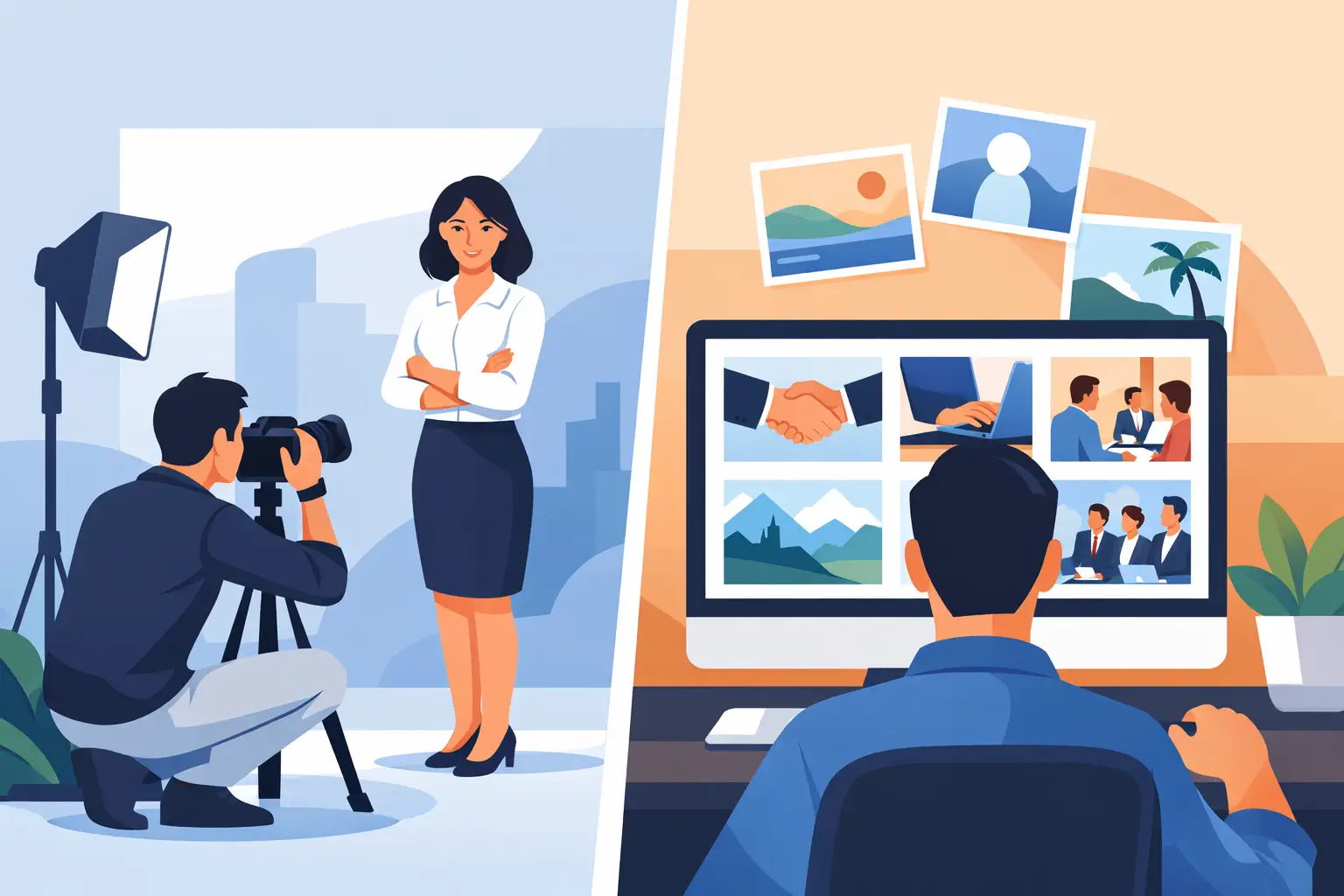
A customer lands on your website, picks up your flyer, or sees your ad while comparing three local businesses. The images do more than fill space. They signal whether your business is credible, established, personal, and worth contacting. That is why the custom photography vs stock decision deserves more attention than simply choosing the fastest or cheapest option.
For small and mid-sized businesses, the right choice is rarely all custom or all stock. It is about using each image type where it does the most work for your brand, your customers, and your budget.
Custom Photography vs Stock: The Core Difference
Custom photography is created specifically for your business. It may include your team, location, products, services, customers, vehicles, equipment, or finished work. The images belong to your brand story because they show the real people and details behind it.
Stock photography is licensed imagery produced for broad commercial use. It can be polished, affordable, and available immediately. A quality stock image can give a campaign the right mood or help communicate an abstract idea that is difficult to photograph.
The practical difference is authenticity and control. With custom photography, you control the setting, wardrobe, composition, color treatment, and message. With stock, you select from what already exists, often knowing that other businesses may be using similar images.
Neither option is automatically better. A hospitality venue needs customers to see its actual rooms, food, and atmosphere before they book. A financial consultant creating a flyer about retirement planning may benefit from a carefully chosen stock image that supports the idea without requiring a complex photo shoot. The visual should match the job it needs to do.
Where Custom Photography Produces the Strongest Return
Custom photography earns its place when trust depends on proof. Local service businesses, property operators, hospitality brands, trades, health providers, and professional teams all benefit when potential customers can see who they will deal with and what they can expect.
For a builder, original photography can show workmanship, clean job sites, materials, and completed spaces. For a restaurant, it can capture the real menu, team, lighting, and energy of the venue. For a property business, it can show the details that make a listing, development, or neighborhood worth considering. These are not generic claims. They are visual evidence.
Custom images also make a brand system more consistent. When photography is planned alongside your logo, business cards, flyers, website, and social templates, every customer touchpoint starts to look connected. The same colors, crop styles, backgrounds, and level of polish can carry through the rollout.
That consistency matters because customers rarely make a decision from one piece of marketing alone. They might first see a social post, then visit your website, then receive a printed flyer or card. If the visuals feel like they came from different businesses, confidence drops. A coordinated image library helps your marketing look intentional at every stage.
Custom photography is especially valuable for these high-trust moments:
- Your website homepage and About page, where customers decide whether the business feels real and capable.
- Service pages that need to show your process, people, work, or facilities.
- Property, accommodation, food, product, and portfolio marketing, where appearance directly affects demand.
- Recruitment materials, proposals, presentations, and local campaigns where your team and culture are part of the offer.
The Costs to Plan for Beyond the Photo Shoot
Custom photography requires more coordination than downloading an image. There is scheduling, site preparation, staff availability, styling, shot planning, and post-production. If the shoot is not planned around clear marketing goals, even good photos can become a folder of attractive files with limited day-to-day use.
Start by identifying the deliverables before the camera comes out. A useful photo brief should define where images will appear: website banners, service pages, business cards, flyers, social media, email campaigns, signage, or proposal documents. It should also account for orientation. A wide website header, vertical social image, and square promotional graphic may need different compositions.
The most budget-smart approach is to capture a focused library in one session. Prioritize evergreen images first: team portraits, exterior and interior spaces, core services, key products, customer interactions, and detail shots. Then add campaign-specific images if time allows. This gives your designer usable assets for months rather than a handful of one-off hero shots.
You should also plan for updates. Team members change, menus evolve, vehicles are replaced, and spaces are renovated. Custom photography is not always a single investment. For businesses that market regularly, a smaller scheduled refresh can be more practical than waiting several years and needing a complete overhaul.
When Stock Photography Is the Smarter Choice
Stock photography is useful when speed, scale, or subject matter makes a custom shoot impractical. It can support a new website or brochure while you build a custom image library. It can also fill visual gaps in campaigns that need concepts rather than literal proof.
For example, a business offering cybersecurity, insurance, coaching, or business advisory services may need imagery that communicates reassurance, focus, growth, or planning. A strong stock image can set the tone while the copy, design, testimonials, and calls to action carry the specific message.
Stock is also practical for seasonal promotions that have a short life span. If you are producing a fast flyer for a holiday offer or a time-sensitive social campaign, a licensed image may be the right production decision. The goal is not to make every asset expensive. The goal is to put effort where customers will notice and where it improves results.
The risk is relying on stock as the entire visual identity. Familiar boardroom scenes, staged handshakes, and overly perfect service workers can make a local business feel interchangeable. Customers may not consciously recognize the image, but they can sense when the marketing has little connection to the business behind it.
If you use stock photography, choose it with the same discipline you would apply to a photo shoot. Avoid images that feel generic, heavily posed, or disconnected from your market. Look for natural expressions, believable environments, and colors that can work with your existing brand palette. Confirm that the license covers the intended use, including print, website, advertising, and social media where required.
A Practical Hybrid Approach for Growing Brands
For many businesses, the strongest answer is a hybrid. Use custom photography for the areas where authenticity drives the decision, then use selected stock images for supporting content, abstract themes, and fast campaign needs.
A local electrician might use original images of its technicians, branded vehicles, switchboards, and completed installations across the website and capability brochure. Stock imagery could then support a blog post about home energy habits or a seasonal safety message. The customer still sees the real business where it matters most.
A hospitality operator might invest in custom images for rooms, food, staff, and the property itself. Stock could be used sparingly for destination-focused editorial content, provided it does not create false expectations about the location or experience.
This approach protects the budget while creating a more believable brand. It also gives your design partner flexibility to build flyers, landing pages, and promotional graphics without forcing one image type into every situation.
How to Decide Before You Spend
Ask one question first: does this image need to prove something unique about our business? If the answer is yes, custom photography is usually the better investment. If the image only needs to create context, mood, or a broad idea, stock may be enough.
Then consider how long the asset will work for you. A homepage image, service brochure, or sales presentation may be seen thousands of times and should represent your actual operation. A one-week social promotion has a different return threshold. Consider audience expectations too. In property, food, accommodation, beauty, and hands-on services, customers expect to see the real thing. Generic imagery creates friction quickly.
Finally, involve design early. Photography performs better when it is planned for the final layout rather than added at the end. A clear creative direction can ensure the images leave room for headlines, work across print and digital formats, and align with your logo kit and wider visual system.
Brandcrafter’s 3P Method – Personal, Practical, Professional – is a useful standard for this decision. Make the images personal enough to show who you are, practical enough to work across the assets you need, and professional enough to support the price and quality your business promises.
Your visuals do not need to be complicated to be effective. Show customers the people, places, products, and results they are choosing, then use stock with purpose when it helps the message move faster. The best image strategy is the one that makes your next customer feel confident taking the next step.