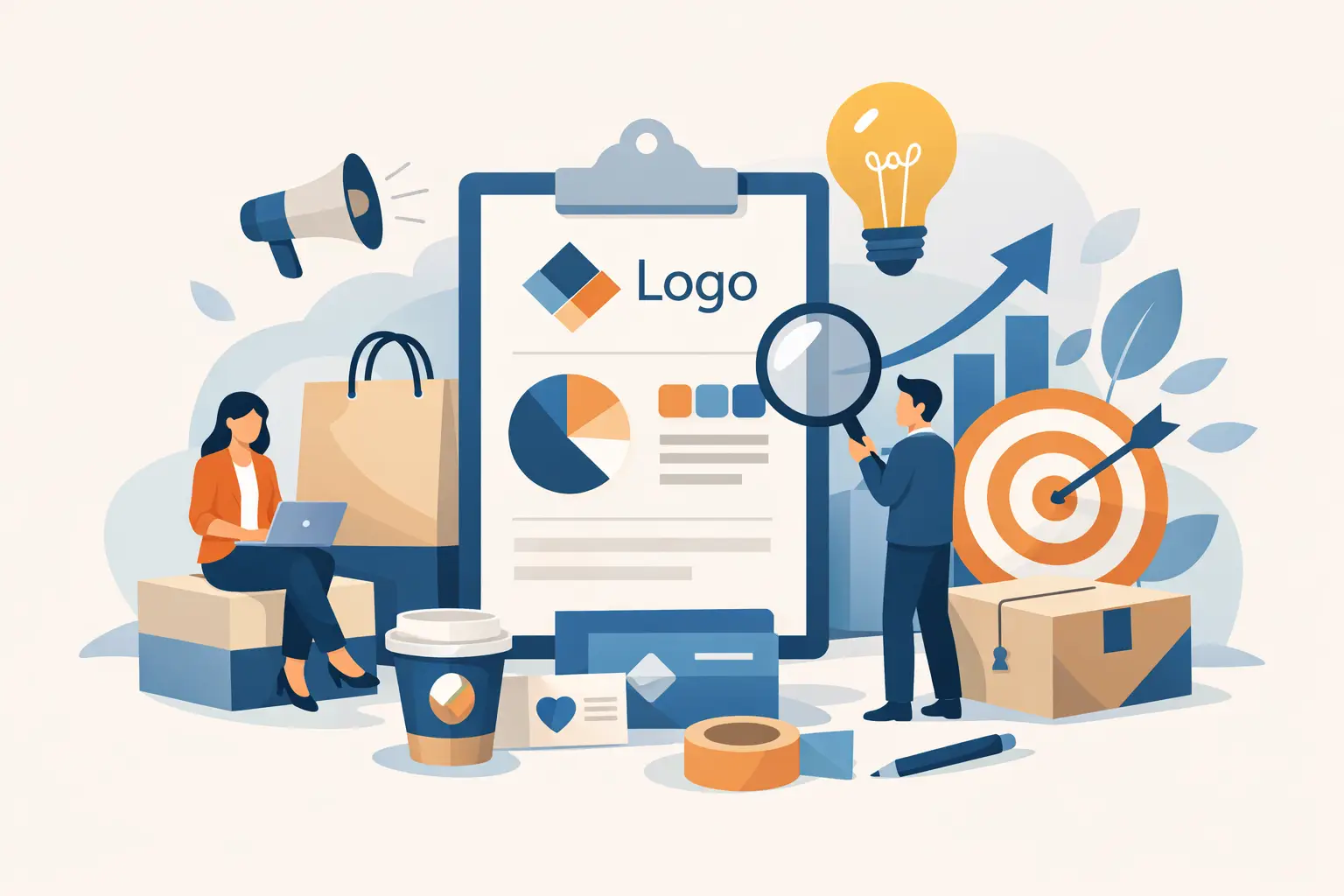
A logo on its own rarely carries a new business very far. You also need the materials customers see when they meet you, call you, receive a quote, visit your website, or pick up a promotion. The best small business branding packages bring those moments together so your business looks established, consistent, and ready to earn trust from the start.
For local service businesses, hospitality operators, property professionals, and growing teams, the right package is not the biggest one. It is the one that gives you the essential tools to show up professionally now, with a clear path to add more as the business grows.
What the Best Small Business Branding Packages Include
A practical branding package should solve immediate business needs, not fill a folder with design files you will never use. At a minimum, look for a professionally designed logo system, usable brand colors and fonts, and marketing materials that support real customer interactions.
The strongest starting point is often a logo, business card, and flyer package. These three assets cover the key stages of local business visibility. Your logo gives the business a recognizable identity. Your card makes everyday introductions more credible. Your flyer gives you a direct way to promote an offer, opening, service, property, event, or seasonal campaign.
A well-built package should include more than one logo file. Ask for files suited to print, web, social media, and everyday office use. That usually means vector artwork for large-format printing, high-resolution PNG or JPG files for digital use, and versions that work on both light and dark backgrounds. A single logo image pasted into a document is not a complete identity system.
You should also receive practical guidance on use. This does not need to be a 60-page corporate brand book. For many small businesses, a concise brand guide is more useful. It should identify approved logo versions, color values, typography, and basic spacing rules so future flyers, signage, uniforms, menus, or social posts remain consistent.
Start With the Business Outcome, Not a Design Style
Before comparing packages, decide what your brand needs to do in the next three to six months. A plumbing company preparing for a local leaflet drop has different priorities than a boutique accommodation provider refreshing its guest experience. A new real estate professional may need a personal logo, cards, property flyers, and photography-ready templates. A café may need signage, menus, loyalty cards, and promotional graphics.
The design should follow the business objective. If your priority is generating calls, your flyer needs a clear offer, simple service information, and an obvious contact path. If you rely on referrals and in-person meetings, your card should be easy to read, properly formatted for print, and aligned with the professional standard customers expect.
This is why low-cost logo-only offers can become expensive later. They may look appealing as a starting price, but they often leave you sourcing each new item separately. The result is inconsistent colors, mismatched fonts, unclear print specifications, and repeated setup costs. A package built around the actual touchpoints your customers use creates a more efficient foundation.
Compare Deliverables Before You Compare Prices
Two packages with similar prices can deliver very different value. One may include a custom logo and print-ready card design. Another may include only a basic logo concept, a flattened image file, and limited permission to revise it. The difference becomes clear when you need to send artwork to a printer, create a sign, or run a promotion quickly.
When reviewing a proposal, look for clear answers to these questions:
- How many logo concepts are included, and how are they presented?
- How many revision rounds are included, and what counts as a revision?
- Which final file formats will you receive?
- Is business card and flyer artwork included, or only the design concept?
- Are print-ready files prepared to the correct size, bleed, and resolution?
- Will you receive a simple color and font guide for future use?
- What is the expected timeline, and what feedback is needed from you to keep it moving?
A package does not need endless concepts or unlimited revisions to be effective. In fact, open-ended creative work can delay a launch and make decisions harder. A structured process with clear checkpoints is usually better for busy owners. You provide a focused brief, review a defined set of directions, give consolidated feedback, and move to final production with confidence.
Choose a Process That Keeps the Project Moving
Great branding is collaborative, but collaboration needs structure. The best providers make it easy for you to contribute without turning every decision into a long email chain.
A process-led package should begin with a discovery stage. This is where the designer learns about your services, audience, competitors, location, personality, preferred style, and practical requirements. Be specific about where the brand will appear. Mention your vehicle signage, menus, uniforms, property boards, invoices, social platforms, shopfront, or promotional print if those are relevant.
The next stage is concept development. You should be able to see how the identity works beyond a logo mark. A logo can look good on a white screen but fail when reduced on a card, printed in one color, or placed over a photo. Reviewing it in realistic applications helps you make a stronger decision.
Then comes refinement and production. This is where a disciplined revision policy matters. Consolidated feedback from the people who can approve the work prevents conflicting direction and avoids unnecessary delays. Once the design is approved, final files should be organized, labeled, and ready for the channels you plan to use.
A practical framework such as Personal, Practical, Professional keeps the work grounded. Personal means the identity reflects your business rather than a generic template. Practical means the assets are built for real marketing use. Professional means every file, format, and finished piece holds up when customers see it.
Know When to Buy a Starter Package and When to Scale Up
A starter branding package is the right choice when you are launching, refreshing a tired identity, or need a credible set of core marketing materials quickly. It gives you a controlled investment and lets you establish consistency before committing to a full website, photography project, or large signage rollout.
Scaling up makes sense when your customer journey requires more touchpoints. For example, a hospitality business may add menu design, event flyers, social templates, professional photography, and website pages. A service provider may add proposal templates, vehicle graphics, uniforms, service brochures, and campaign materials. The goal is not to buy everything at once. The goal is to make each new asset feel like part of the same business.
Modular packages are especially useful for businesses managing cash flow carefully. You can launch with the essential identity, card, and flyer, then schedule the next stage around a new service, busy season, relocation, or marketing campaign. This staged approach protects consistency while keeping spending connected to business priorities.
Watch for Gaps That Create Extra Work Later
A package can sound complete while leaving out items that matter. Printing is a common example. Some studios provide print-ready artwork but not physical printing, while others coordinate the full job. Neither option is automatically better, but you should know which one you are buying.
Photography is another consideration. Strong design cannot fully compensate for weak images, particularly for property, hospitality, food, beauty, and product-based businesses. If photography will play a major role in your marketing, plan the visual direction alongside the identity. Your colors, layouts, image style, and website should support one another.
Also confirm ownership and access to your final artwork. You should understand what files you receive and whether you can use them with printers, web developers, or future marketing partners. Clear handover prevents delays when an opportunity appears and you need new materials fast.
Build for Recognition, Not Just a Launch Date
The right branding package should make the next marketing decision easier. When you need a new flyer, event graphic, sales sheet, or updated card, the visual rules are already in place. Your business looks familiar to customers, even when the message changes.
That recognition is where branding earns its value. People may not remember every detail of a promotion, but they notice when a business looks organized, consistent, and serious about its service. Choose a package with the assets, process, and production support to create that impression repeatedly, then give your brand room to grow with the work you are building.